
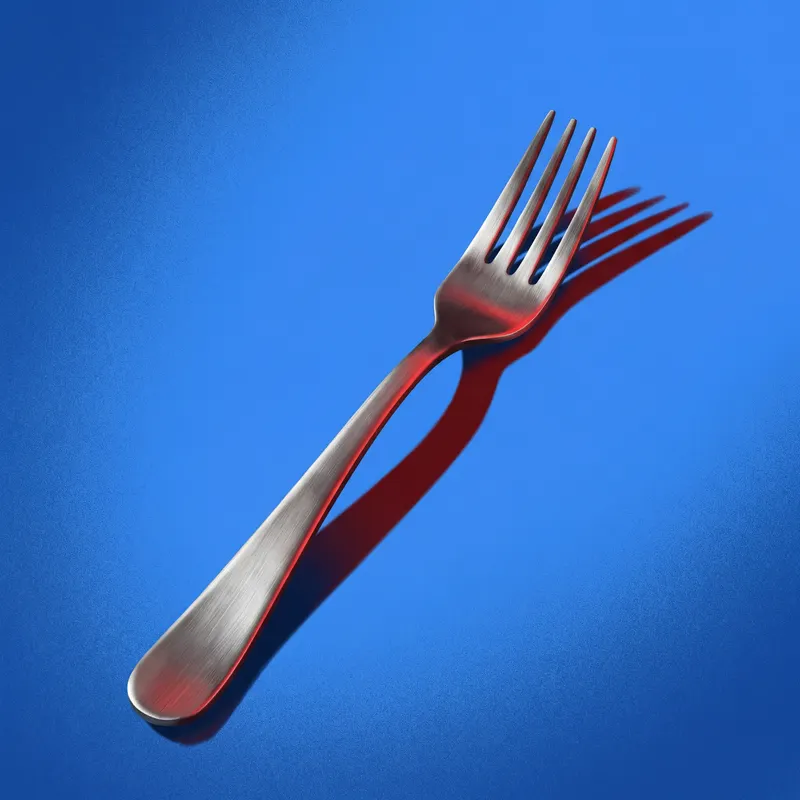
Food photography is about capturing a moment: the steam rising from a hot dish, the condensation on a cold glass, the light hitting the fork at just the right angle. It's one part skill, one part intuition, and one part luck.
The challenge is that food is ephemeral. It wilts, it cools, it dries out. You have minutes, sometimes seconds, to capture the shot before the moment passes. This is why food photography demands both precision and rapid iteration.
Here's what I've learned working with food photographers across Shape.
The Golden Hour Rule for Food
Natural light is the foundation of good food photography. Artificial light makes food look artificial. But not all natural light works.
The best light for food comes from the side or slightly behind. Never shoot food with light directly from above—it flattens color and texture. Side light creates shadows that emphasize texture and depth, making food look more appetizing and three-dimensional.
Timing matters enormously. Shoot during golden hour (early morning or late afternoon). This light is warm, diffuse, and forgiving. At midday, sunlight is too harsh and creates blown-out highlights. At night, you need artificial fill light.
Here's the framework I use with food photographers:
| Lighting Setup | Best For | Challenges | Payoff |
|---|---|---|---|
| Natural Side Light | Most food; shows texture | Timing dependent; weather dependent | Most appetizing; looks natural |
| Backlighting | Drinks, translucent items, steam | Creates lens flare; needs careful metering | Dramatic, highlights detail |
| Artificial Fill Light | Night shoots; supplementing natural light | Can look artificial; color temperature mismatch | Control; consistency across multiple shots |
| Diffused Overhead | Flat lay food composition; styled plates | Can flatten; needs strong composition | Clean, minimal aesthetic |
Styling: Making Food Look Its Best
Food photography is partially about the food, but mostly about everything around it.
Use a food stylist when possible. Professional food stylists know how to make dishes look fresh and appetizing despite heat, time pressure, and camera settings. They use tricks: ice cream substitutes, makeup for meat, glycerin for water droplets.
If you're styling your own food:
- Plate composition. The plate matters as much as the food. Use negative space. Don't fill the plate completely. Leave room for the eye to rest.
- Garnishes and props. Fresh herbs, edible flowers, and complementary items (a wine glass, utensils, cloth) add story and context.
- Temperature. Hot foods steam, cold foods sweat. These details sell the emotional moment. But they also mean you have seconds to capture the shot.
- Color and contrast. The food should stand out from the background and plate. If your plate is white, use darker food or a darker table. If your background is dark, use lighter plates.
The Speed Problem: Capturing Before Food Changes
Food degrades quickly. Heat causes condensation to evaporate, ice cream to melt, garnishes to wilt. You're not just fighting time—you're fighting physics.
This is where AI starts to look interesting for food photography. You can shoot the food quickly with your smartphone, then use AI to generate stylized variations—different backgrounds, different lighting moods, different plating presentations. This lets you test multiple versions without reshooting.
The caveat: AI food photography still looks somewhat artificial. But for rapid testing and iteration, it's increasingly valuable.
Camera Settings for Food
Use a shallow depth of field. Wide aperture (f/1.8–f/2.8) keeps the focus on the hero food and blurs the background. This isolates the subject.
Shoot in RAW. Food color is critical and subjective. RAW gives you maximum flexibility in post-processing to adjust color temperature and saturation.
Use a tripod. Even slight camera shake is visible in close-up food photography. Plus, a tripod lets you take your time positioning props and adjusting light.
Final Thoughts
Food photography is one of the most accessible and most competitive categories. Everyone eats, everyone has opinions about food photos. The difference between good and great food photography is subtle but unmistakable: it's the difference between wanting to look at food and wanting to eat it.
Master the fundamentals—natural side light, careful plating, and rapid iteration—and you'll create food photos that convert.
Written by Marko Balažic, founder of Shape. We help food brands photograph products at scale with AI. Curious how?